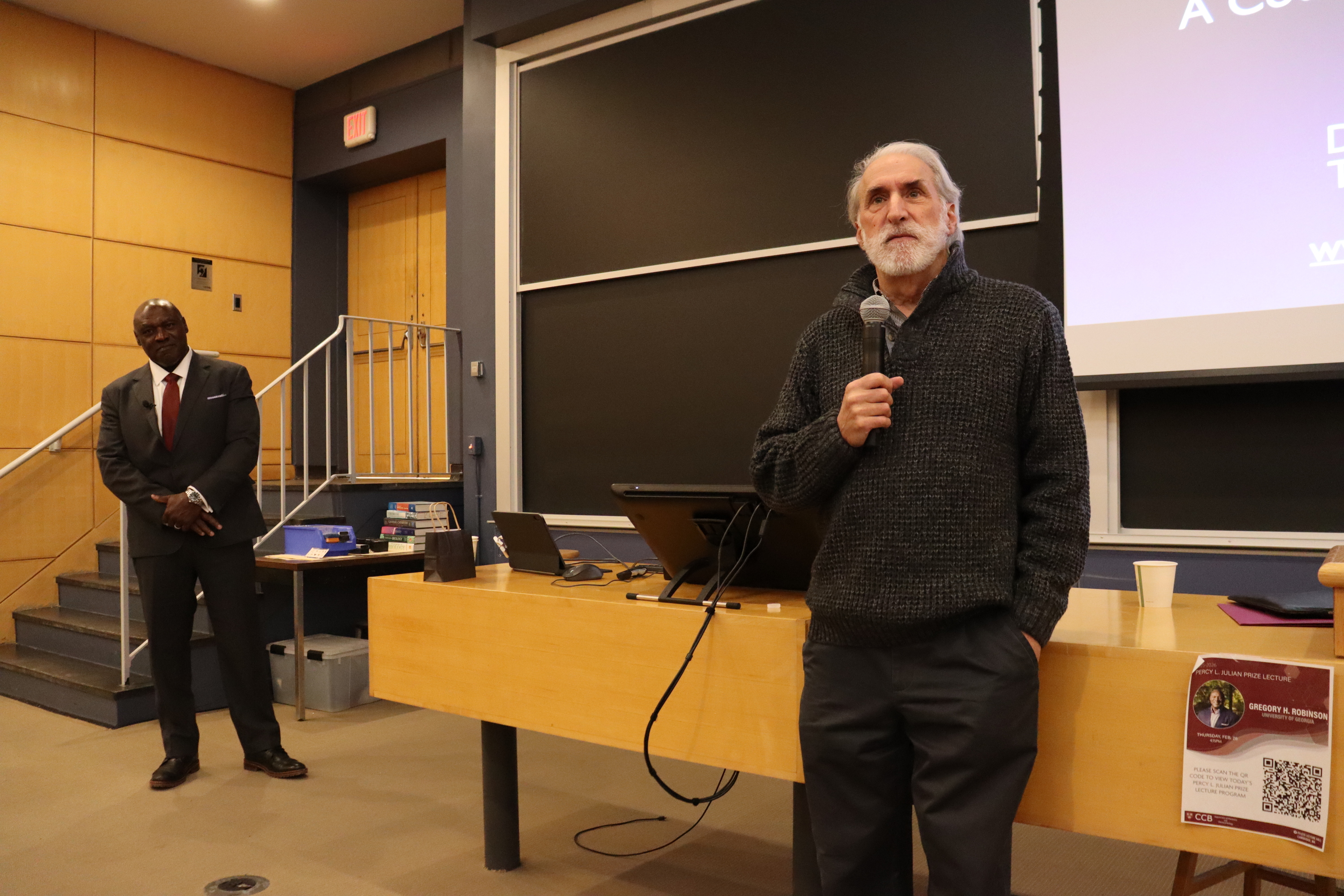
Gregory H. Robinson (U Georgia) delivers Percy Lavon Julian Prize Lecture
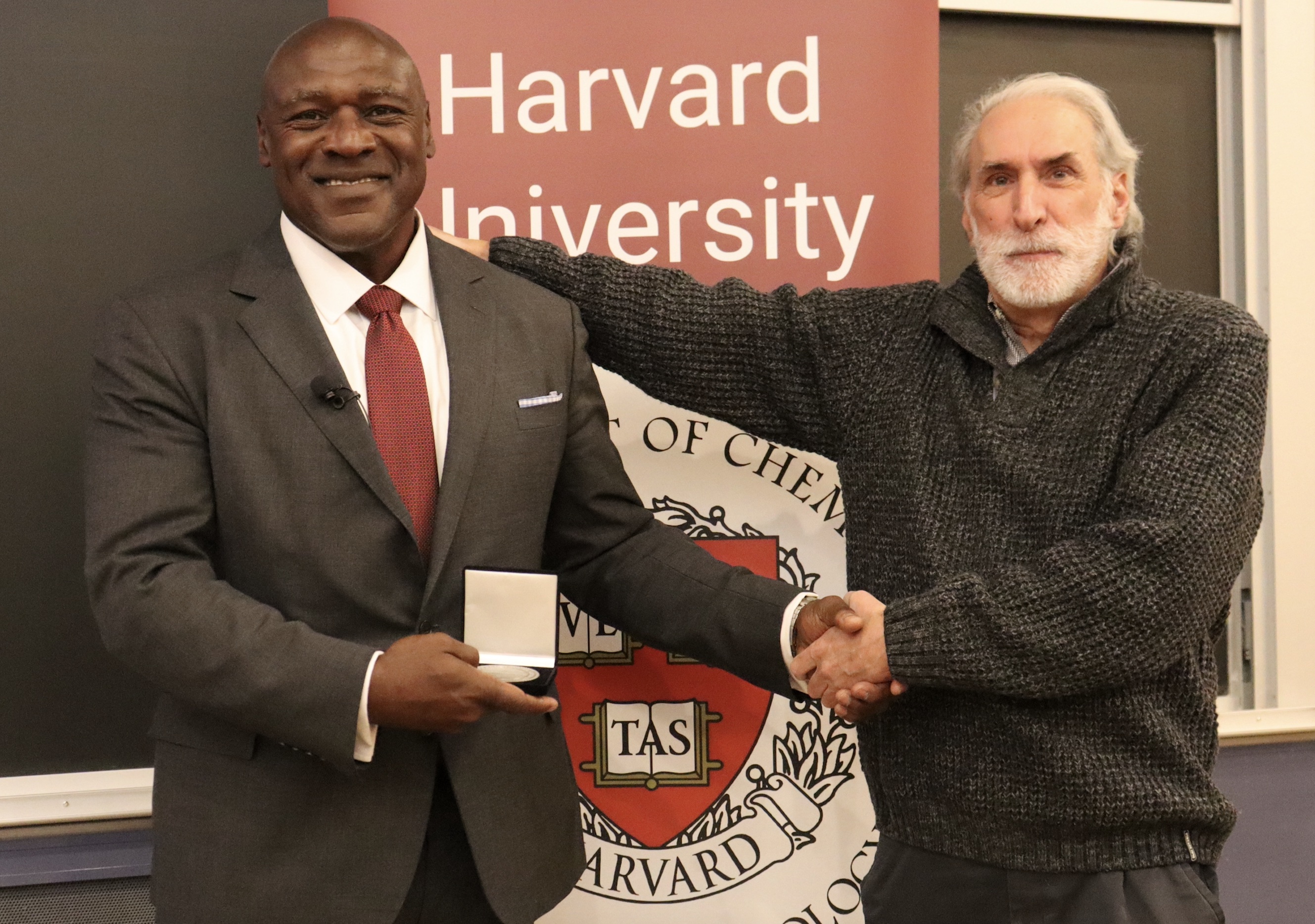
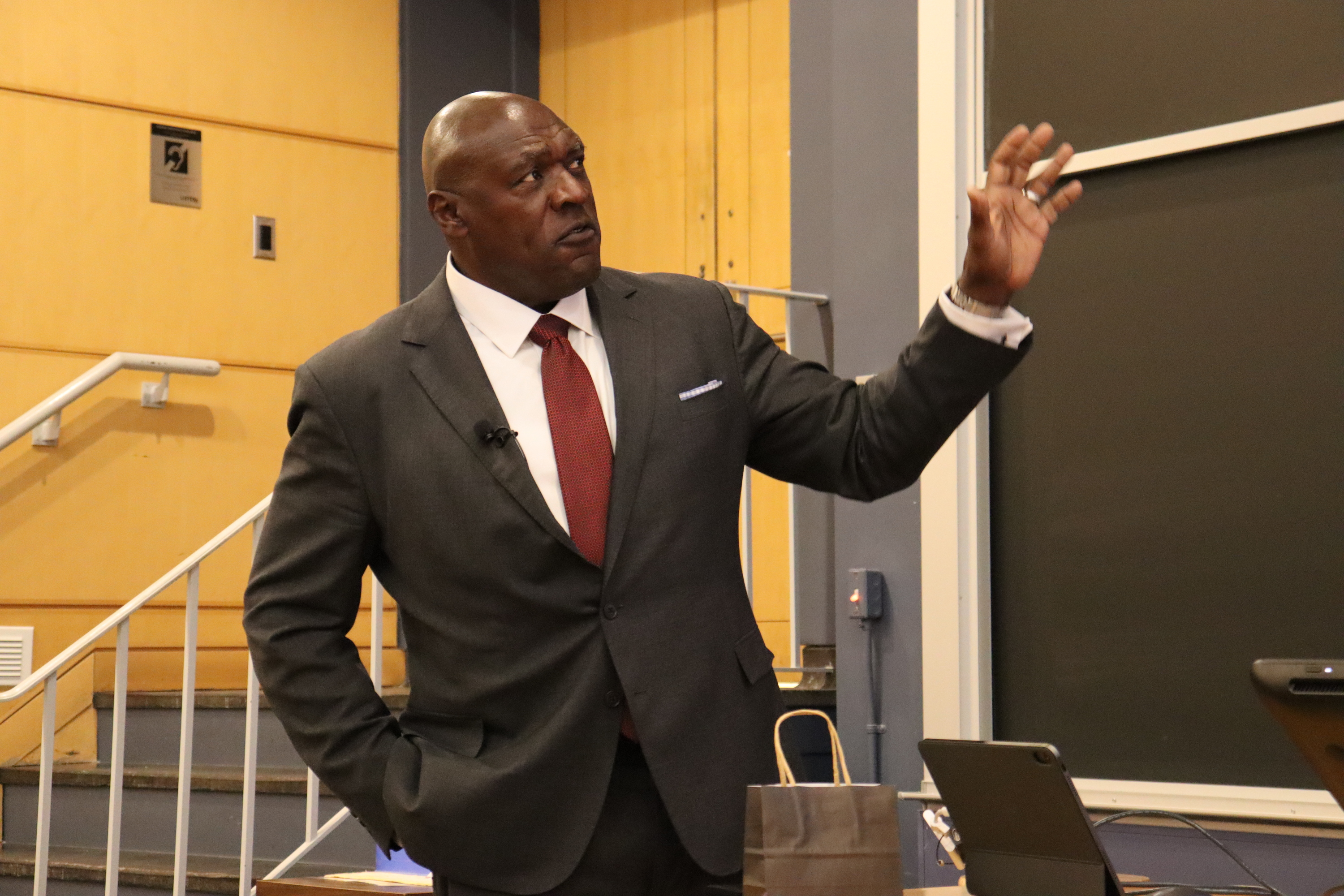
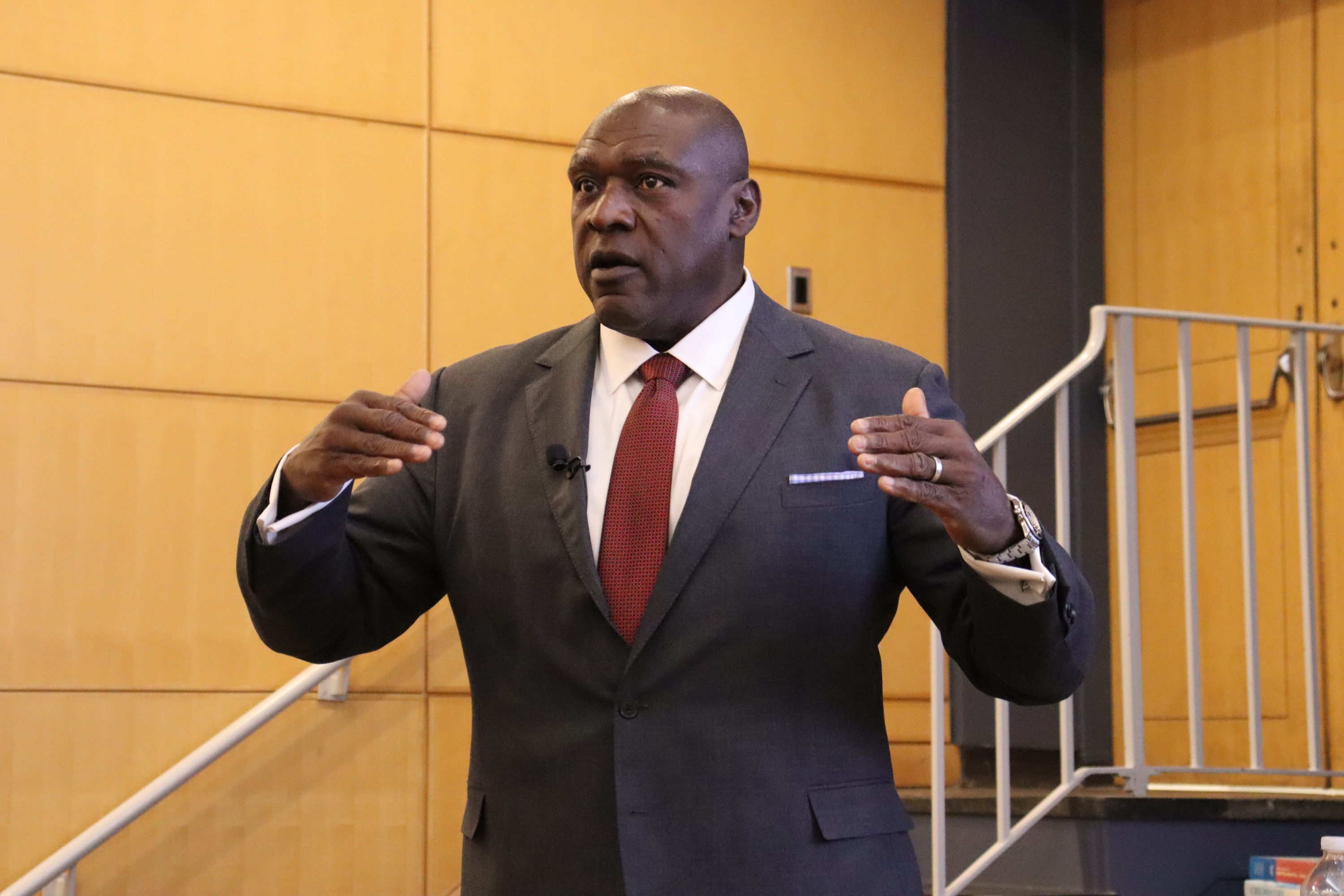
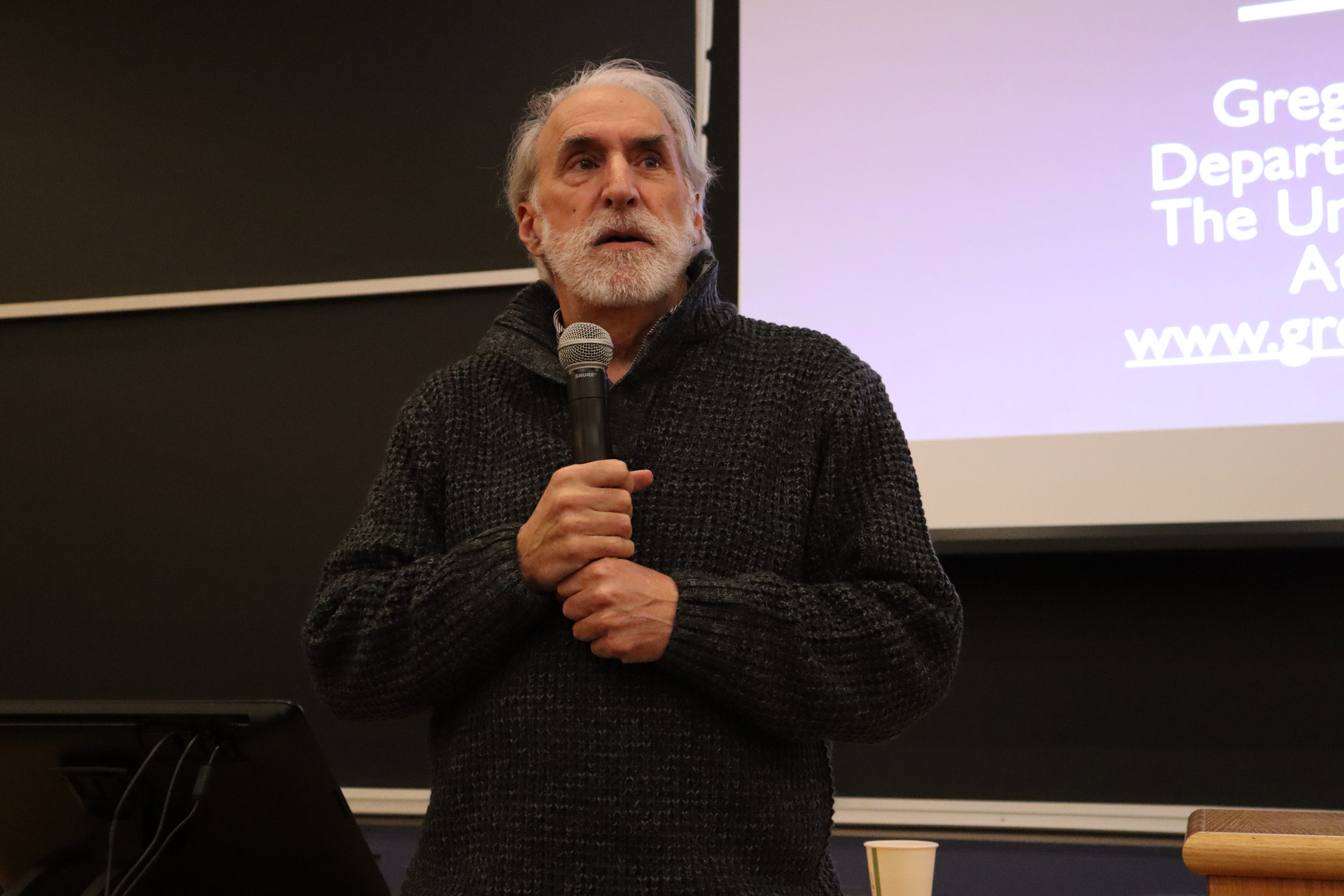
On Thursday, February 26, Gregory H. Robinson, the UGA Foundation Professor at the University of Georgia, delivered his Percy Lavon Julian Prize Lecture, "N-Heterocyclic Carbenes and Dithiolene Radicals: A Counterintuitive Main Group Chemistry Trek."
Robinson is a synthetic inorganic chemist recognized for his research on the synthesis, molecular structure, and reactivity of novel molecules that prominently feature main group (earth abundant) elements. Robinson’s research efforts have considerably expanded our understanding of the nuanced, and sometimes counterintuitive, nature of chemical bonding involving these elements. Robinson was born in Anniston, Alabama. Both studious and athletic in high school, Robinson attended Jacksonville State University on a football scholarship and earned his B.S. in Chemistry (1980). Robinson garnered his Ph.D. in Chemistry from The University of Alabama (1984), where he studied the organometallic chemistry of aluminum. Robinson began his academic career at Clemson University (1985), successfully rising to the rank of professor, and the faculty of The University of Georgia a decade later. Robinson has received a number of awards for his research, the most prominent include the American Chemical Society’s F. Albert Cotton Award in Synthetic Inorganic Chemistry and the Alexander von Humboldt Senior Research Award.
Percy Lavon Julian was born on April 11, 1899, in Montgomery, Alabama. Julian, the son of a railway mail clerk and the grandson of enslaved people. Julian earned a master's degree from Harvard in 1923 and a Ph.D. from the University of Vienna. Julian’s groundbreaking work in synthesizing steroids, including cortisone, and his innovations in creating affordable synthetic drugs greatly impacted medical treatments for conditions like arthritis. Julian became notable for his synthesis of physostigmine, a drug used to treat glaucoma, and his work with soy-based compounds. As one of the first Black chemists in the American chemical industry, he also held a senior position at Glidden Company, where he developed soy-based products, including a fire-retardant foam widely used during World War II. Julian is also remembered for his significant work on progesterone and cortisone. Julian remained at Glidden until 1954, when he founded his own company, Julian Laboratories, which he eventually sold in 1961 for $2.3 million to Smith, Kline and Upjohn pharmaceutical companies. In 1964, he organized his own research institute where he continued his experimental work and consulted for chemical companies. In 1973, Julian was inducted into the National Academy of Sciences, as only the second African American to achieve this honor.
The synopsis of Robinson's lecture is below: "This laboratory has long pursued the synthesis, structure, and reactivity of unusual molecules that prominently feature main group elements. These efforts resulted in several significant milestones including the experimental realization of “metalloaromaticity" (the concept that metallic rings may also display traditional aromatic behavior as exhibited by benzene), synthesis of the first molecules containing a boron-boron double bonds—the first “diborenes”, and synthesis of the first molecule containing a triple bond between two main group metals (the gallium analog of acetylene). Research efforts have also concerned carbene-stabilization of highly reactive main group molecules such diphosphorus (P2), diarsenic (As2), and disilicon (Si2). This presentation will prominently feature the efforts of the Robinson Laboratory to synthetically augment the molecular template of N-heterocyclic carbenes and their synthetic conversion to stable dithiolene-based chemical radicals, which have shown promise in the activation of small molecules, such as ammonia."
Pictures below: