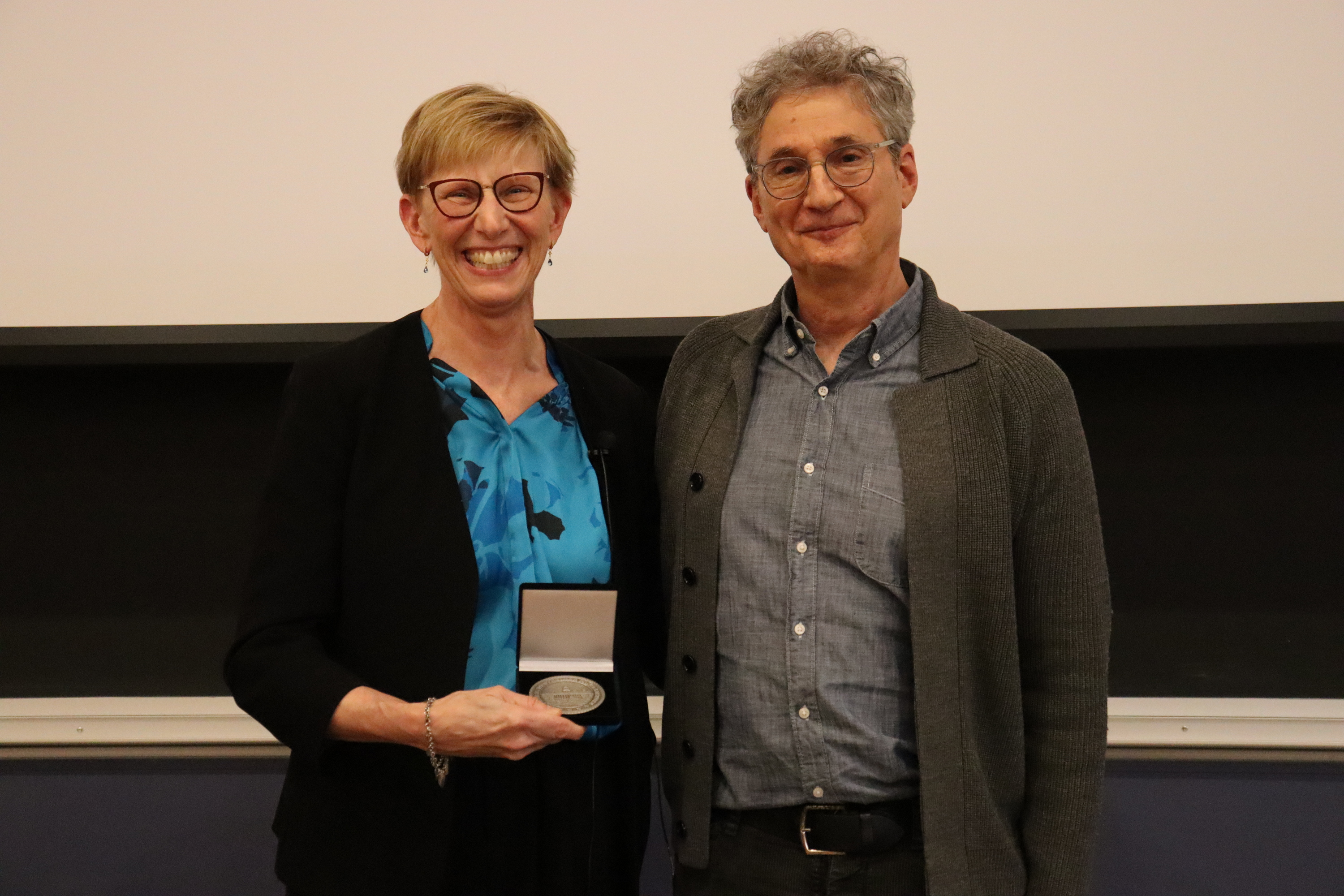
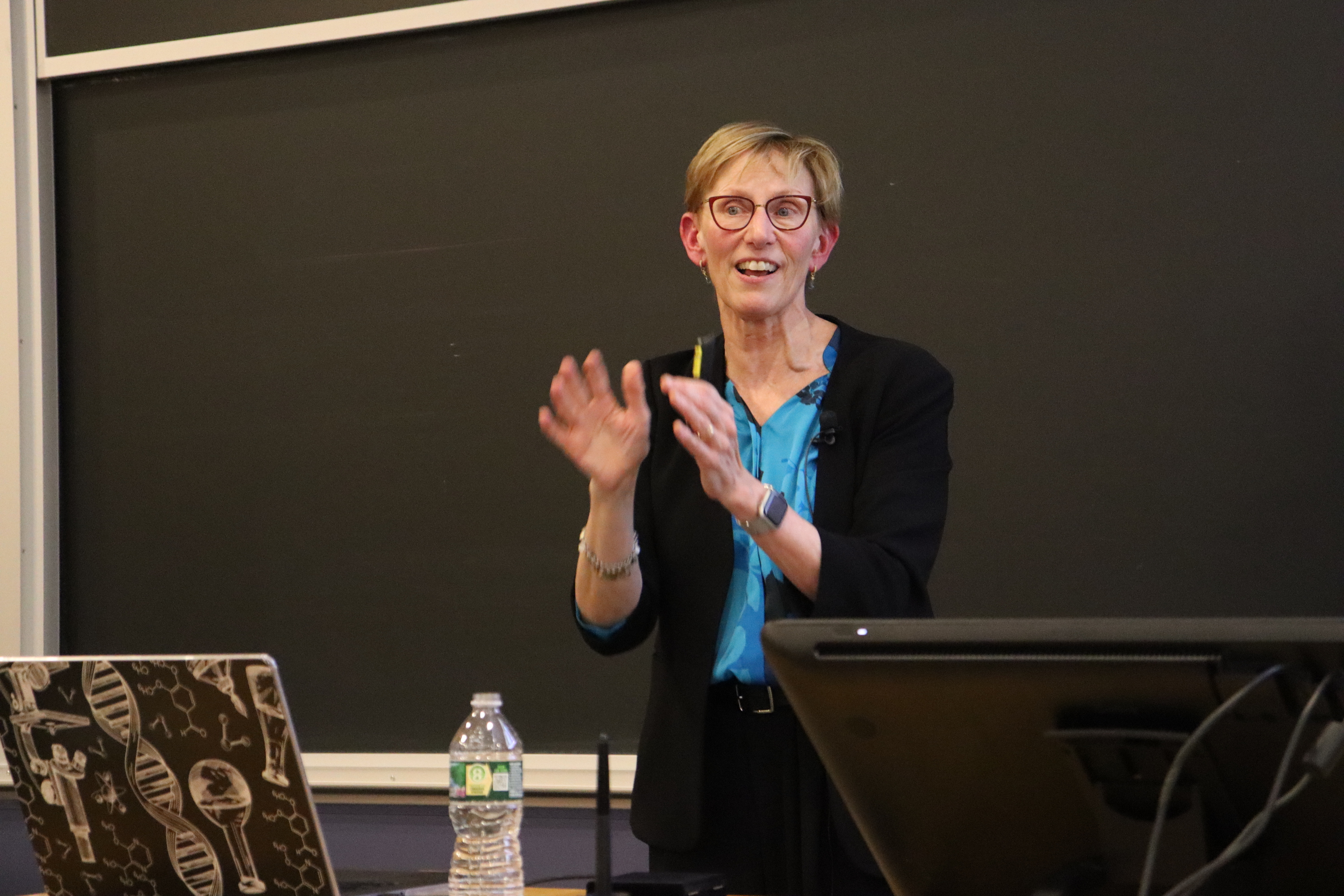
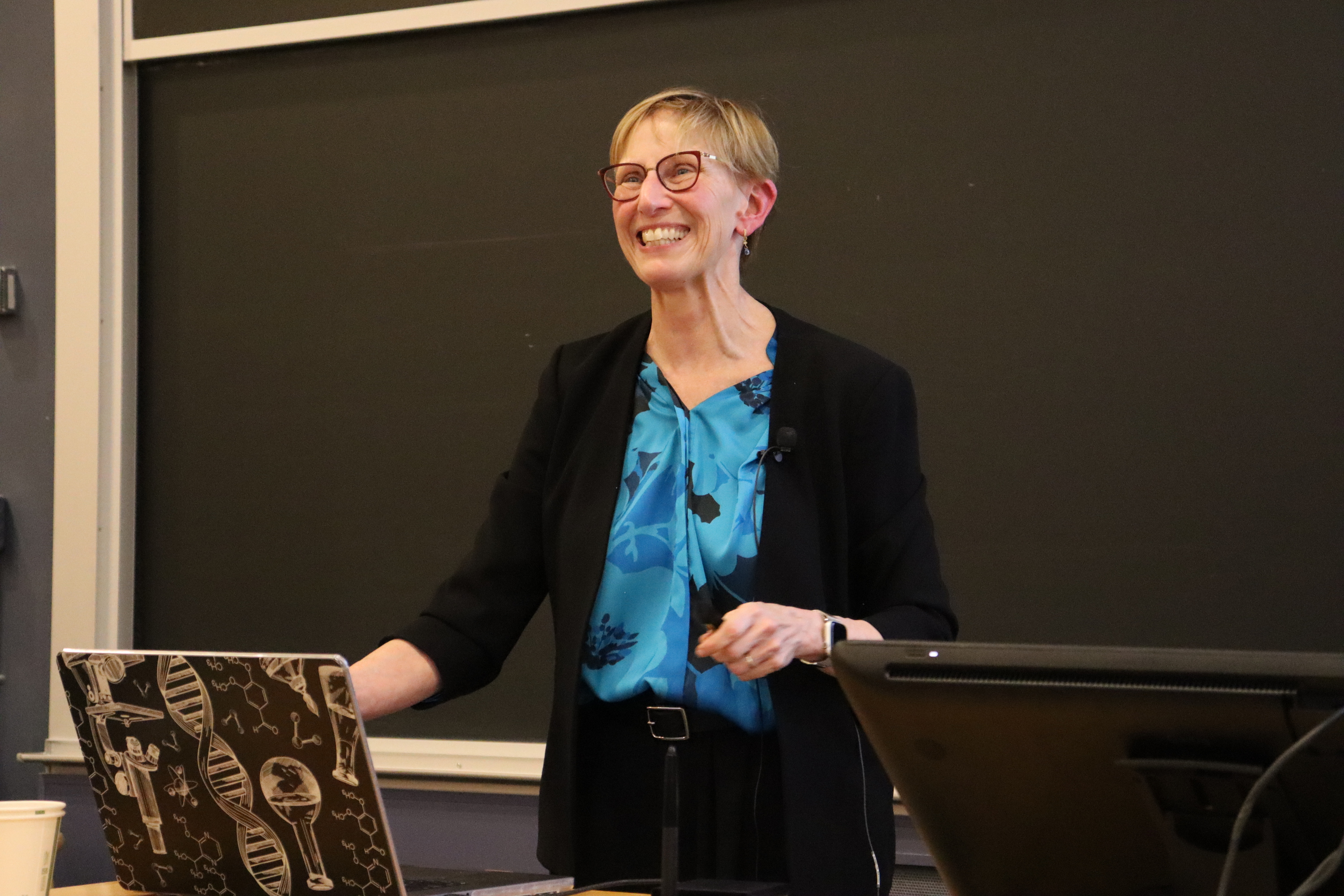
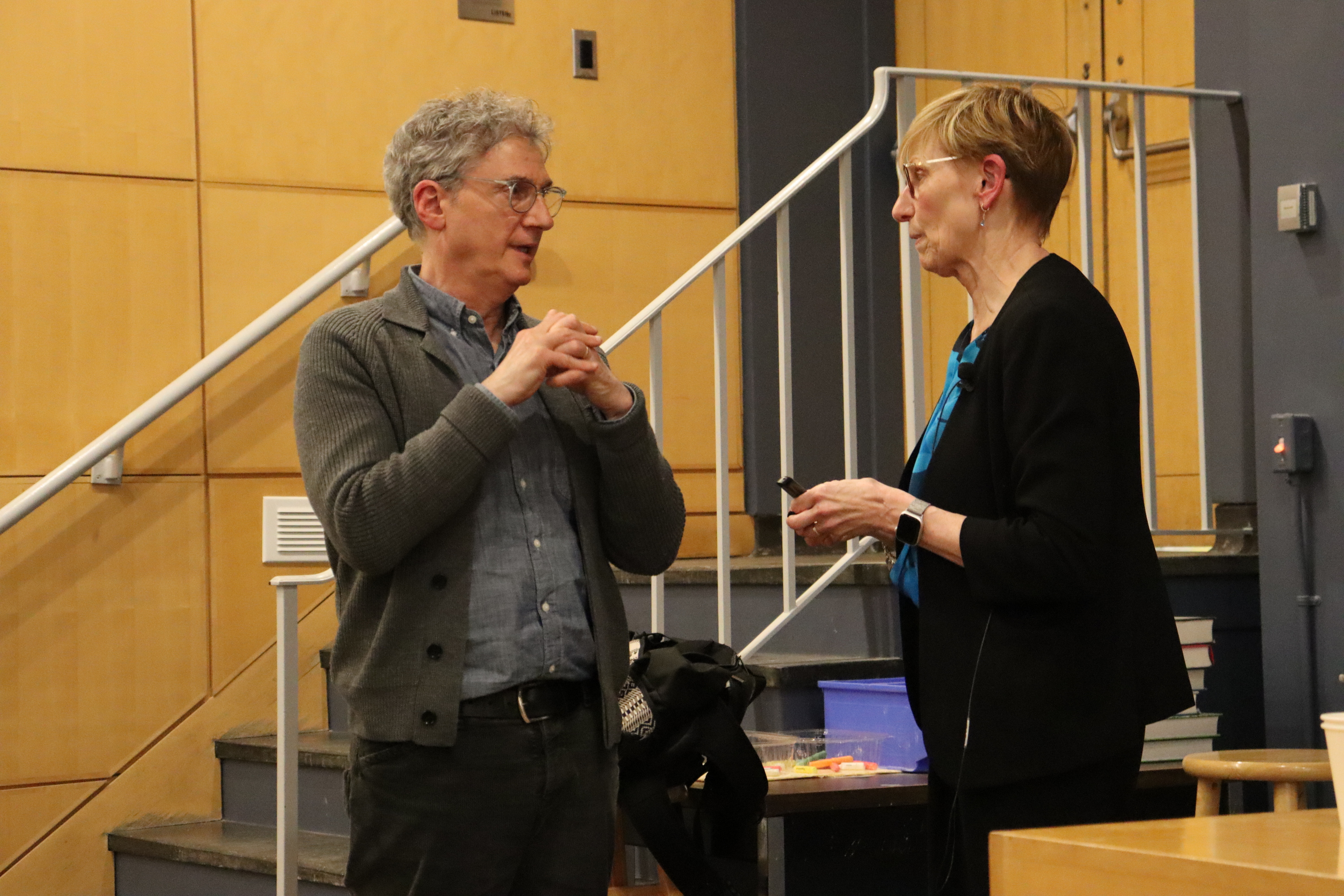
Laura Kiessling (MIT) delivers Frank H. Westheimer Prize Prize Lecture
On Thursday, March 12 Laura Kiessling her Frank H. Westheimer Prize Lecture, "Chemical probes of bacterial glycans."
Laura Kiessling earned a BS in Chemistry from the Massachusetts Institute of Technology and a Ph.D. in Organic Chemistry from Yale University. After two years at the California Institute of Technology as an American Cancer Society Postdoctoral Fellow, she joined the faculty of the University of Wisconsin, Madison in 1991. In 2017, she returned to MIT as the Novartis Professor of Chemistry and Member of the Broad Institute. She is also a Member of the Koch Institute and an Associate Member of the Ragon Institute. Her interdisciplinary research interests have advanced our understanding of cell surface recognition processes, especially those involving protein-glycan interactions. Laura is a Fellow of the American Association for the Advancement of Science, and a Member of the American Academy of Microbiology, the National Academy of Sciences, and the National Academy of Medicine. She was the founding Editor–In-Chief of ACS Chemical Biology. Her honors and awards include a MacArthur Foundation Fellowship, a Guggenheim Fellowship, the ACS Gibbs Medal, the Tetrahedron Prize, the Centenary Prize of the Royal Society of Chemistry, and the Ronald Breslow Award for Achievement in Biomimetic Chemistry.
Frank H. Westheimer, Morris Loeb Professor of Chemistry Emeritus, at Harvard University and one of the key figures in 20th century chemistry, was born in Baltimore on Jan. 15, 1912. He attended Dartmouth College and graduated summa cum laude in 1932. Westheimer entered the graduate program at Harvard in 1932 to study under James B. Conant. During World War II, he was a supervisor at the National Explosives Research Laboratory. After the war, he resumed his post at the University of Chicago, where he remained until moving to Harvard in 1953. At Harvard, he was the Morris Loeb Professor and an admired teacher of both undergraduate and graduate students. He served as a science adviser to President Lyndon Johnson, and in 1966 he chaired the Committee of the U.S. National Academy of Sciences that set a course of action for federal support of the chemical sciences. He served as a science adviser to President Lyndon Johnson, and in 1966 he chaired an enormously influential Committee of the U.S. National Academy of Sciences that set a course of action for federal support of the chemical sciences. In 2002 Harvard University established the Frank H. Westheimer Medal for scientific excellence in his honor.
A synopsis of the prize lecture is below:
Bacteria rely on their microbial glycans to survive. Moreover, they use this glycan covering to mediate host colonization, pathogenesis, and regulate immune responses. Controlling the microbes that live in us – to our benefit or detriment – requires new strategies to detect and visualize their glycans. Our group has developed novel chemical probes image and report on microbial polysaccharides. This talk will describe new methods that rely on new chemistry to visualize critical glycans within the carbohydrate coat of Mycobacterium tuberculosis and related pathogens. Using these chemical probes, we have uncovered a vulnerability in the cell envelope that can be exploited to enlist host clearance. An increased understanding of the pathways and functions of these non-human glycans will aid in combating and controlling infectious diseases.
Pictures: