Richmond Sarpong (UC Berkeley) delivers Percy Lavon Julian Prize Lecture
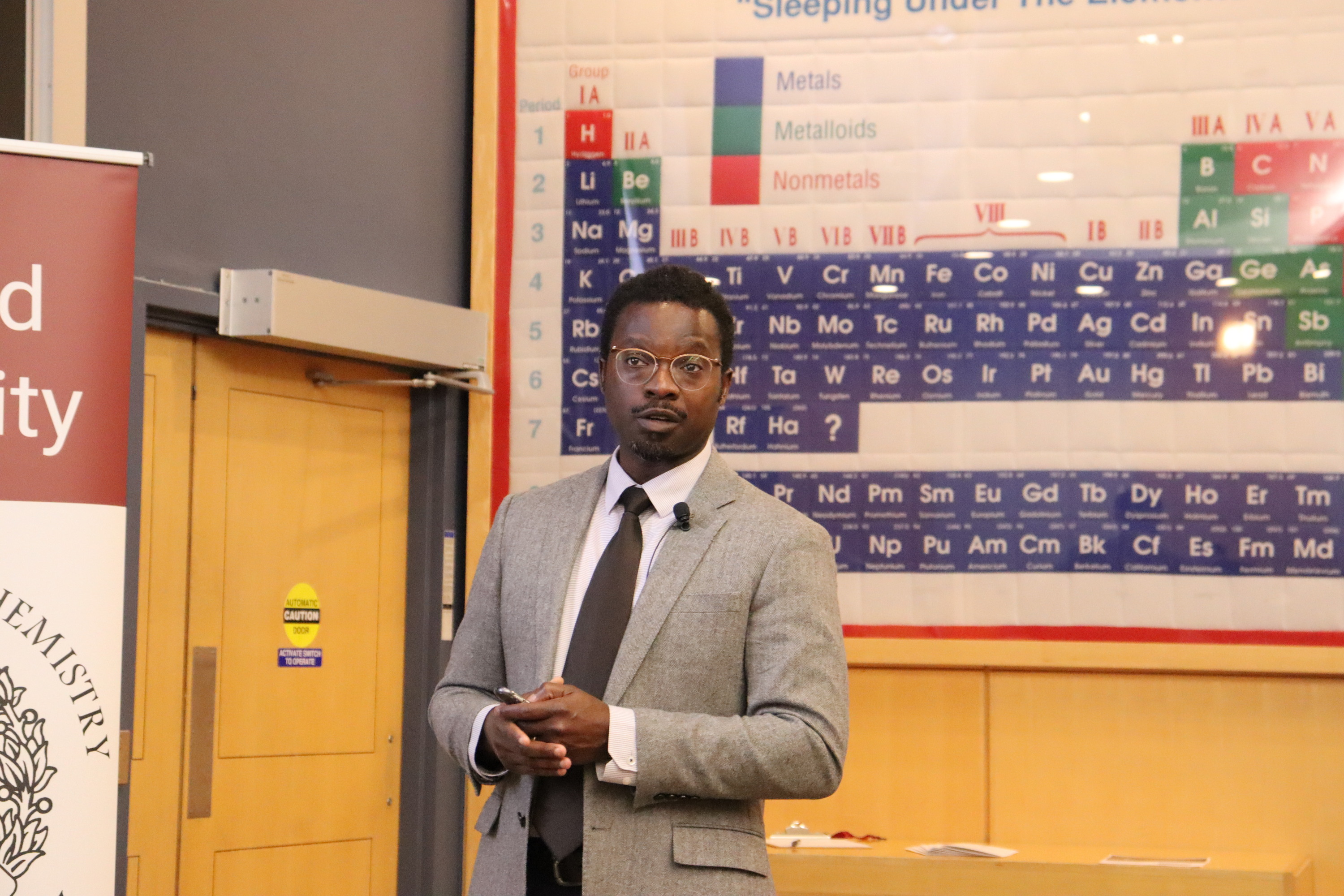
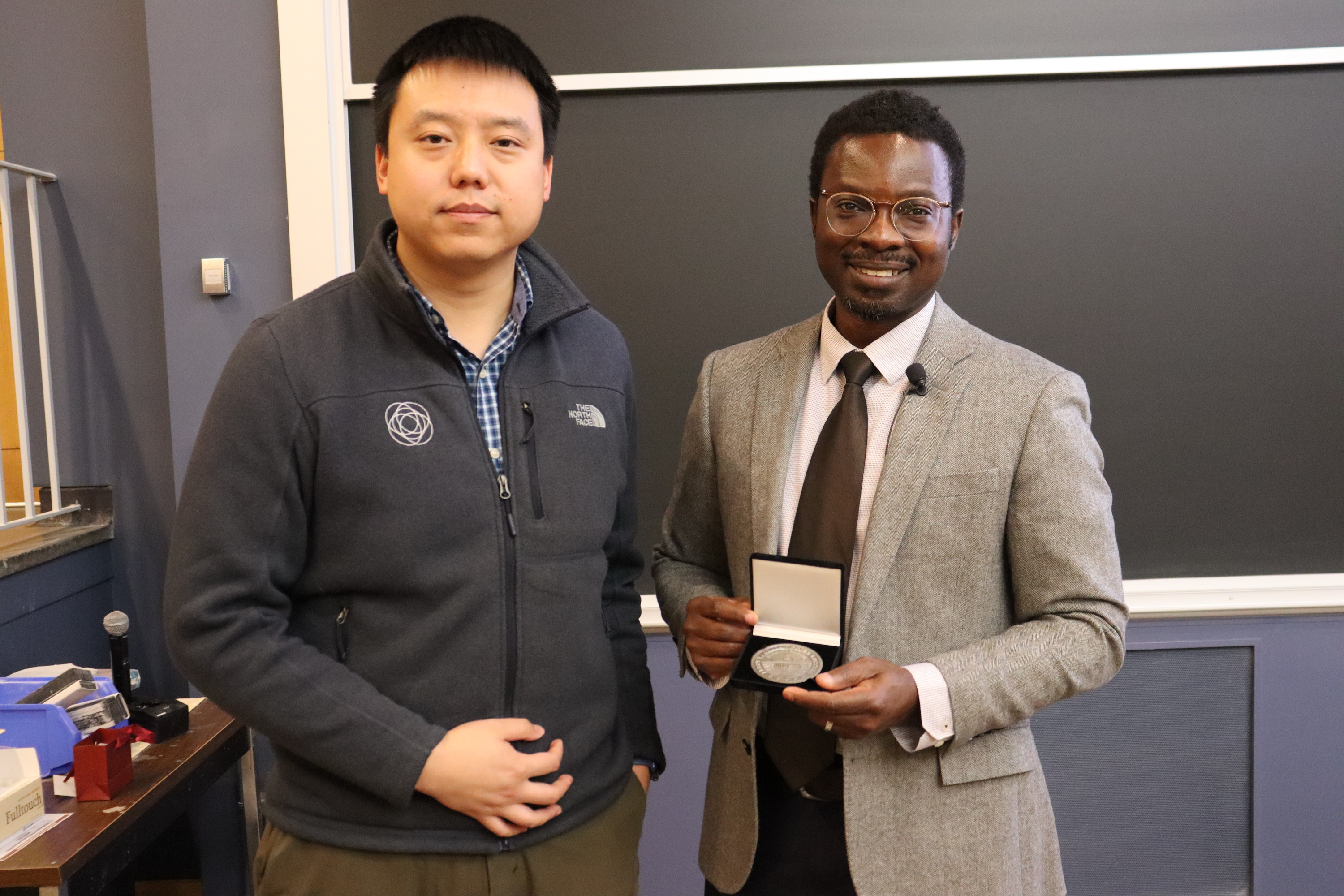
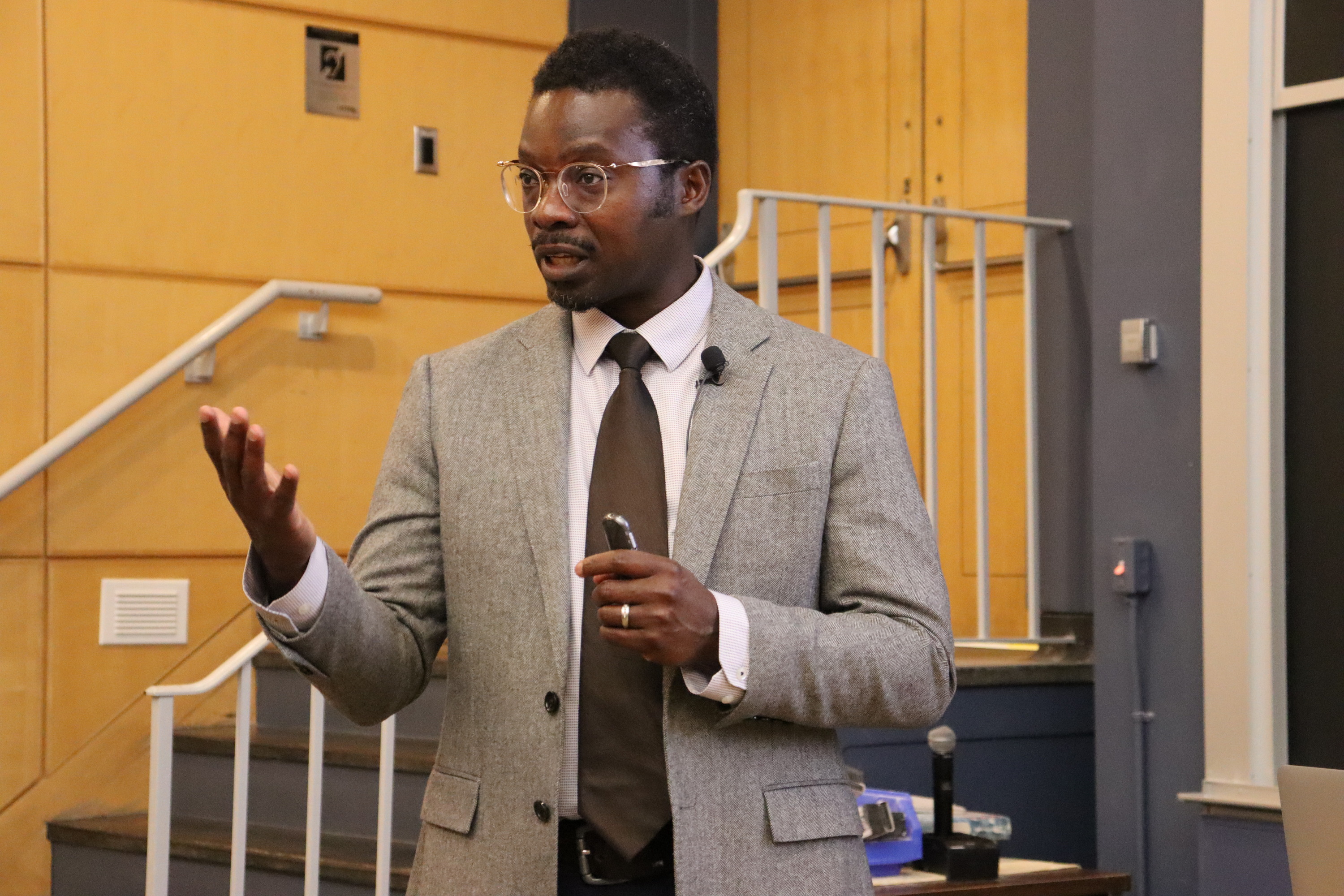
On Friday, October 29, Richmond Sarpong (UC Berkeley), the Maxine J. Elliott University Chair at the University of California at Berkeley, delivered his Percy Lavon Julian Prize Lecture, "Strategies and Methods for Chemical Synthesis Inspired by Complex Natural Products."
Richmond became interested in chemistry after seeing, firsthand, the effectiveness of the drug ivermectin in combating river blindness during his childhood in Ghana, West Africa. Richmond described his influences and inspirations in a TEDxBerkeley talk in 2015 (Face of Disease in Sub-Saharan Africa). Richmond completed his undergraduate studies at Macalester College in St. Paul, MN with Prof. Rebecca C. Hoye and his graduate work was carried out with Prof. Martin Semmelhack at Princeton. He conducted postdoctoral studies at Caltech with Prof. Brian Stoltz.
At Berkeley, Richmond’s laboratory focuses on the synthesis of bioactive complex organic molecules, with a particular focus on secondary metabolites that come from marine or terrestrial flora and fauna. These natural products continue to serve as the inspiration for new medicines. It is Richmond’s hope that through the work in his laboratory, he and his coworkers will uncover methods and strategies for synthesis that may contribute to more efficient ways to prepare bioactive compounds that may inspire new medicines.
Percy Lavon Julian was born on April 11, 1899, in Montgomery, Alabama. Julian, the son of a railway mail clerk and the grandson of enslaved people. Julian earned a master's degree from Harvard in 1923 and a Ph.D. from the University of Vienna. Julian’s groundbreaking work in synthesizing steroids, including cortisone, and his innovations in creating affordable synthetic drugs greatly impacted medical treatments for conditions like arthritis. Julian became notable for his synthesis of physostigmine, a drug used to treat glaucoma, and his work with soy-based compounds. As one of the first Black chemists in the American chemical industry, he also held a senior position at Glidden Company, where he developed soy-based products, including a fire-retardant foam widely used during World War II. Julian is also remembered for his significant work on progesterone and cortisone. Julian remained at Glidden until 1954, when he founded his own company, Julian Laboratories, which he eventually sold in 1961 for $2.3 million to Smith, Kline and Upjohn pharmaceutical companies. In 1964, he organized his own research institute where he continued his experimental work and consulted for chemical companies. In 1973, Julian was inducted into the National Academy of Sciences, as only the second African American to achieve this honor.
The synopsis of Robinson's lecture is below: "Natural products continue to inspire and serve as a basis of new medicines. They also provide intricate problems that expose limitations in the strategies and methods employed in chemical synthesis. Several strategies and methods that have been developed in our laboratory and applied to the syntheses of architecturally complex natural products will be discussed. In particular, new ways to employ the cleavage of core bonds such as C–C and C–N bonds to achieve skeletal editing will be presented."
Pictures below: