Harvard Chemistry Students Go to Washington
At the end of November, Chemistry 100R students traded in their lab coats and scientific instruments for talking points and presentations as they headed to the halls of Congress to advocate for policies and laws that impact the sciences.
In this unique undergraduate chemistry course, led by Professor Heidi Vollmer-Snarr, students dedicate 90% of their time to laboratory research projects and the remaining 10% to science advocacy, enabling them to communicate their findings not only to technical audiences but also to policymakers. This semester, students studied and promoted molecular glue candidates, which are small molecules that create and modulate interactions between proteins, resulting in potential therapeutic applications in cancers, infections, and other diseases.
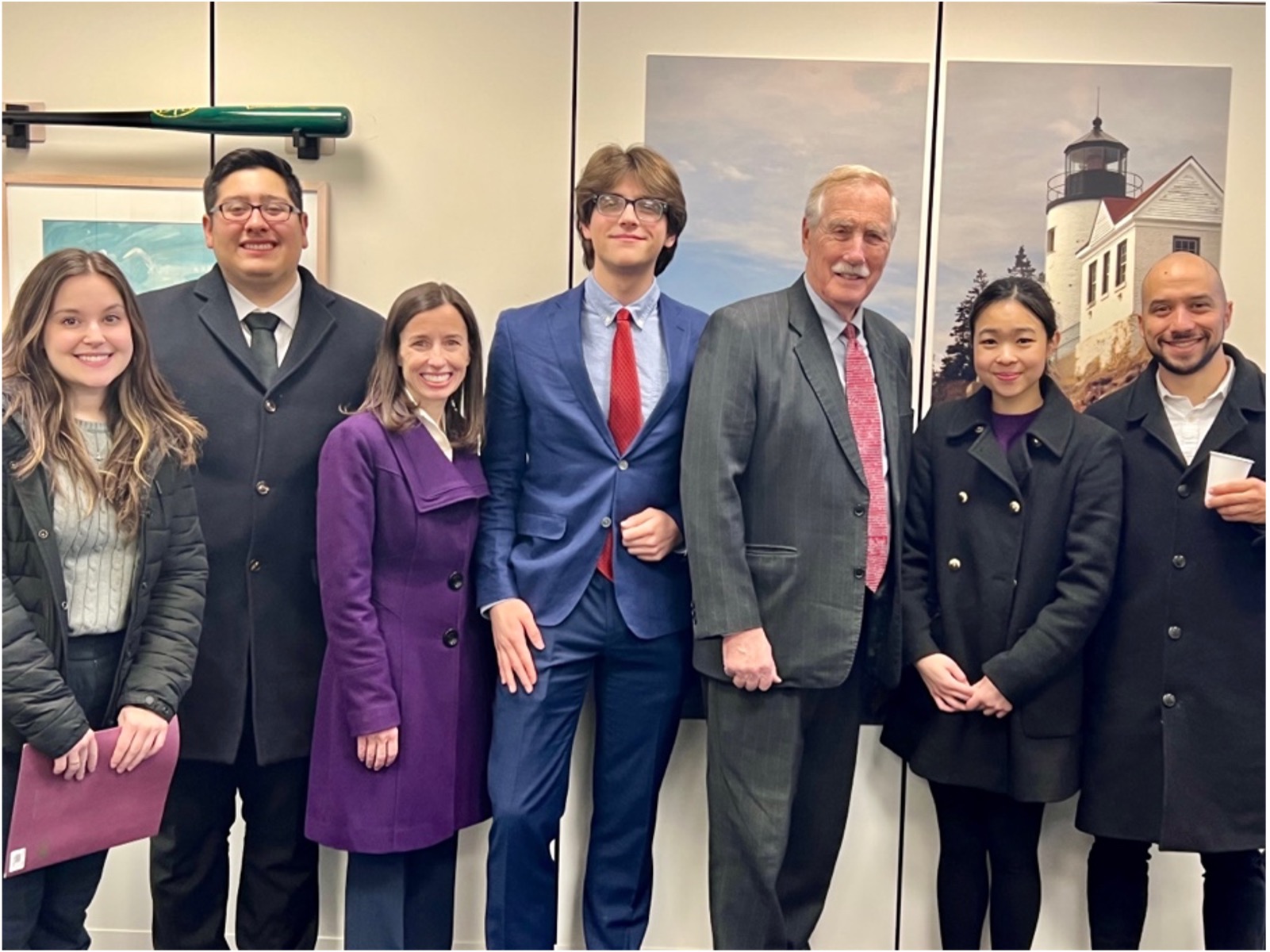
During this trip, 14 students, including 9 undergraduates, connected with 21 members of Congress and their staff from November 28 to 29.
“The advocacy process helps students learn that the implementation of their research in society is not only about the success of their experiments, but also about the laws that support this success,” said Vollmer-Snarr. “We consider it a bonus when students’ advocacy efforts lead to bill co-sponsorships and ultimate passage into law.”
Since Fall 2019, when the combined research–advocacy model was introduced, student research projects have spanned bioanalytical, computational, and physical organic chemistry, as well as organic synthesis and chemical biology. Professor Vollmer-Snarr facilitated the advocacy process by providing students with spreadsheets of bills related to their research, categorized into research, environmental sustainability, healthcare, education, and EDIB (equity, diversity, inclusion, and belonging).
Encouraged to advocate for legislation personally meaningful to them, students chose bills and formed groups. Through a series of assignments, students honed their advocacy skills for months by drafting persuasive talking points they would use for real conversations with legislators. Leading up to the trip, students participated in a workshop led by experts from the American Chemical Society (ACS), focusing on translating scientific language into persuasive and accessible arguments.
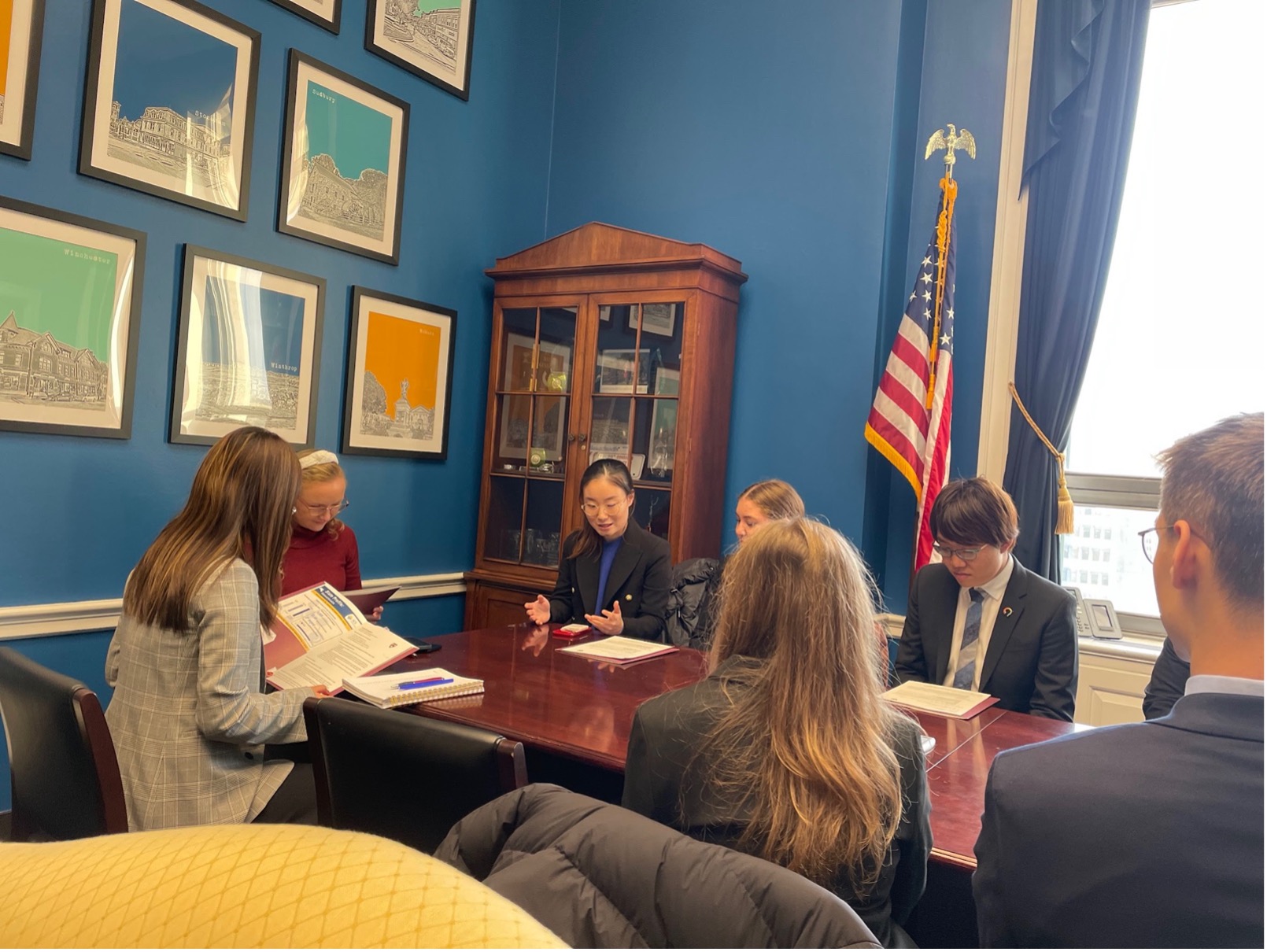
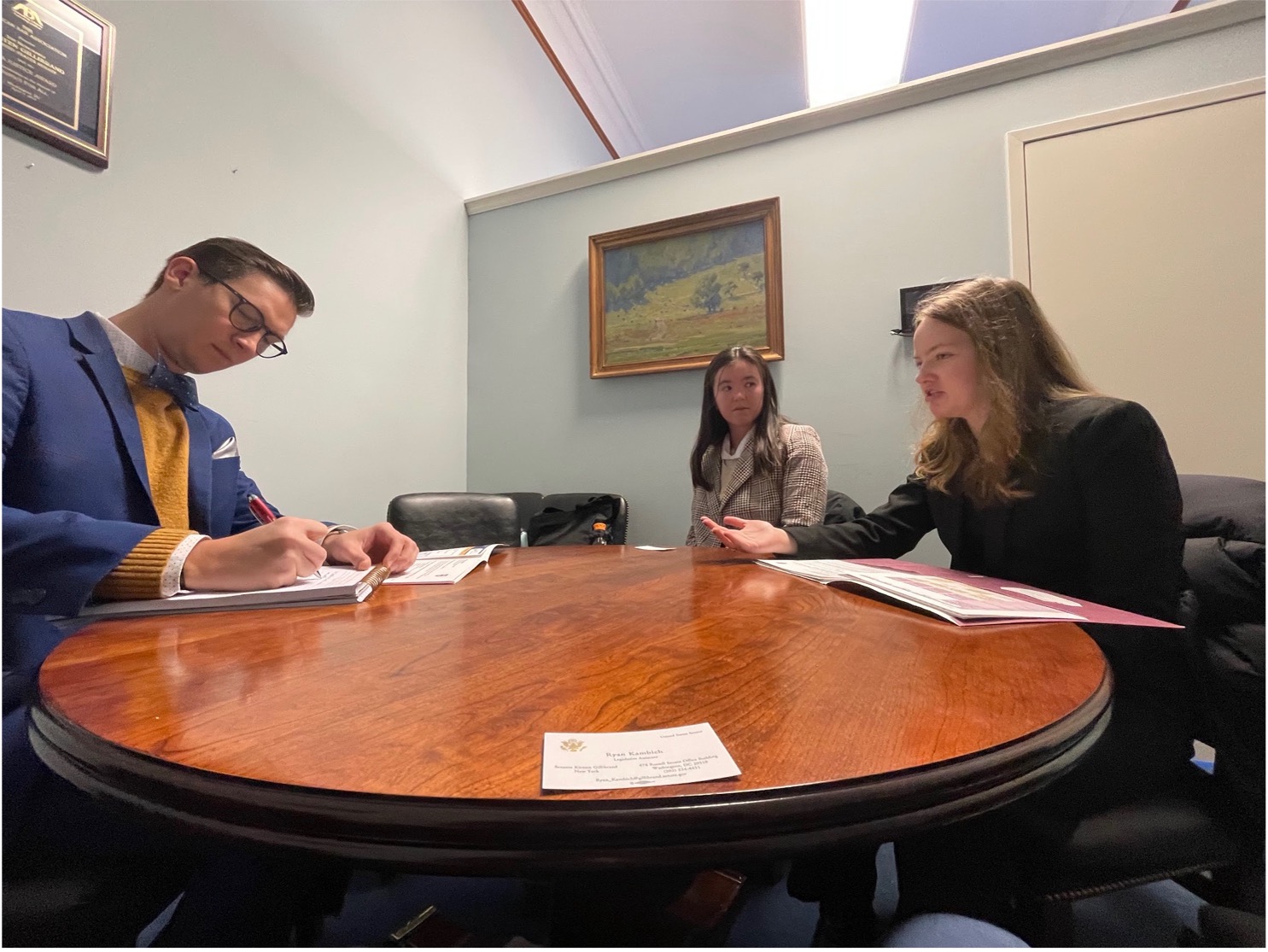
In D.C., students visited Senate and House offices where they presented relevant scientific data and kept their discussions nonpartisan, sharing human interest stories about why they were advocating for specific legislation. Mina Barac, an undergraduate from Serbia interested in healthcare policy, advocated for appropriations for the End Tuberculosis Now Act of 2023 in a bid to study and prevent diseases.
“They were very receptive to the issues I brought up and were interested to learn more about the bill and tuberculosis in general,” Barac said. “While they learned something from me, I learned a lot from them as well. Many were happy to go beyond bill talk and discuss their experiences when it comes to passing bills and discussing their careers.”
Barac’s effort paid off; after her meeting she was informed that Rep Chris Deluzio (PA-17) had cosponsored the legislation based on Barac’s advocacy. Over four years, bills advocated for by students were voted through committees and signed into law as part of the Defense Authorization Act of 2021 and the CHIPS and Science Act of 2022.
Beyond the tangible outcomes of their advocacy, students credit the course for helping them to realize their own interests and potential impact. Anna Moiseieva, a Ukrainian citizen living in the state of New York, was inspired by her time advocating for the CHIPS and Science Act of 2022.
“I found my experience as a woman pursuing chemistry and engaging in chemistry research particularly informative when speaking with the staffers,” Moiseieva said. “I found that connecting my experience to the goals of the CHIPS and Science Act, especially highlighting the importance of a diverse workforce, was compelling when speaking to staffers about the importance of this act and how it may be possible to gain bipartisan support.”
Moiseieva hopes to continue making an impact on science policy by harnessing her scientific education.
“I was surprised at the scientific background that some of the staffers had, from working in labs to biochem undergrad and graduate degrees,” Moiseieva said. “I found that very encouraging personally, because I hope to pursue work in the legal field or work on policy in the future and I often question the relevance of my chemistry degree to my future career goals.”
The palpable excitement among students has become a driving force for Vollmer-Snarr to continue incorporating a science advocacy component into the advanced research course. Beyond the thrill of laboratory experiments, students are learning that impact of their research is based on both the success of their experiments but also about the policies that support this success.
Pictures: